
Home > Blog >
A Mobile Smart Screen combines a portable smart display, wireless connectivity, and interactive entertainment in one flexible device. It supports modern lifestyles where people move between home entertainment, remote work, and social activities. For B2B buyers, it also creates opportunities for customized display solutions across different markets.
However, mobility alone does not define a practical display. Screen clarity, battery performance, connectivity, and usability all influence daily experiences. Therefore, businesses should evaluate how each feature serves specific users and applications.
Modern households often use one room for several activities. A living room may become a workspace during the day and an entertainment area at night. Meanwhile, fixed displays usually suit more permanent viewing arrangements.
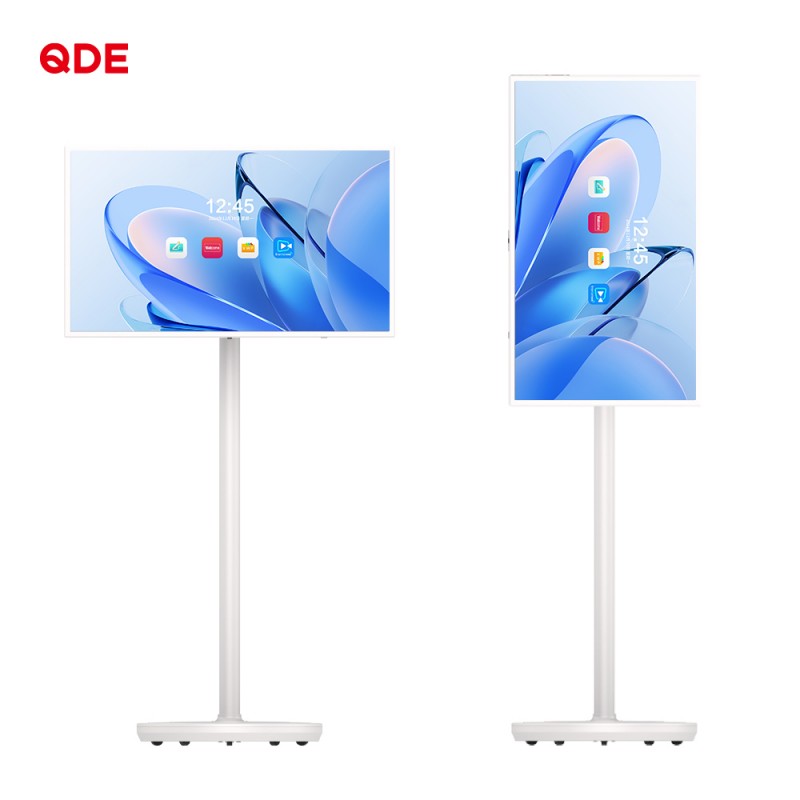
A portable smart display offers greater flexibility through its integrated handle and 360-degree rotatable stand. Users can reposition the screen for cooking guidance, video calls, exercise, or movie nights. Furthermore, its battery-powered design supports viewing without keeping the display connected to a wall outlet.
The described model weighs under 22 kilograms and supports a more flexible setup. Its 360-degree rotatable stand helps users adjust viewing angles around different spaces. Additionally, the built-in battery provides up to 10 hours of operation under the stated product specifications.
For retailers and distributors, these features support positioning across home entertainment and lifestyle categories. Explore our to assess potential applications.
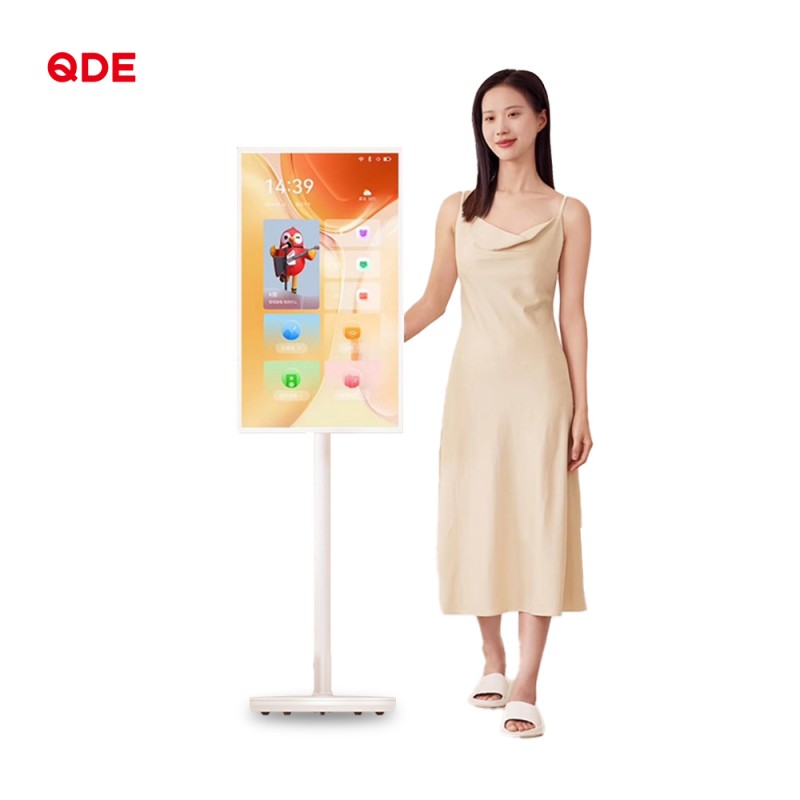
Remote workers need displays that adapt to changing workspaces. For example, users may prepare presentations at a kitchen table or join meetings from a shared room. A mobile interactive screen can bring essential visual tools into these environments.
The built-in front-facing camera supports video meetings. Screen mirroring also lets users present compatible laptop content on a larger display. Moreover, HDMI 2.1, USB-C, and wireless connectivity provide different connection options for supported devices.
Wi-Fi 6 supports wireless networking, while Bluetooth 5.3 connects compatible accessories. The product also specifies a front-facing 1080P camera for video calls. Together, these features support everyday collaboration without requiring a permanently installed meeting display.
For business buyers, compatibility deserves careful attention. Check the operating system, conferencing applications, external device requirements, and regional network standards before bulk procurement. Consequently, distributors can match configurations to their customers’ working environments.
Welcome to preview our Mobile Smart Screen product range and explore display solutions for different application scenarios.
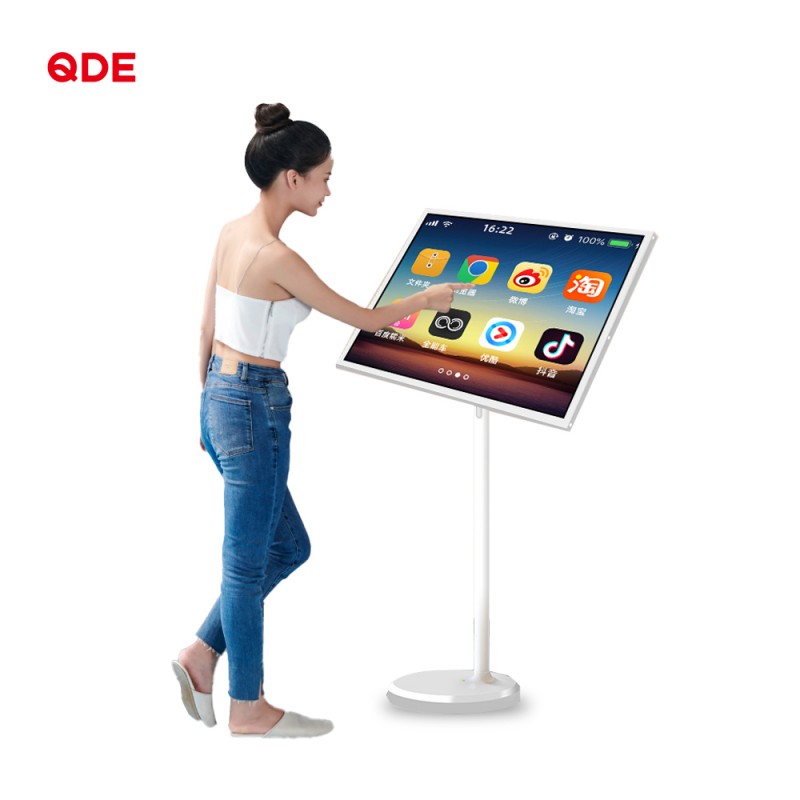
Shared entertainment involves more than displaying videos. Families and friends may stream shows, play games, browse photographs, or make group calls. Therefore, a battery-powered smart display should support both comfortable viewing and convenient interaction.
The described product combines built-in streaming applications with dual stereo speakers. Its multi-user touch capability also supports suitable interactive games and collaborative activities. In addition, users can display digital photographs between entertainment sessions.
The specified touchscreen offers 2.5K resolution and a peak brightness of 500 nits. AI brightness adjustment helps adapt the image to changing ambient lighting. Meanwhile, an anti-glare design and anti-blue-light mode support viewing comfort across different settings.
Actual visual performance depends on lighting, content, and viewing distance. Therefore, buyers should evaluate demonstration units under realistic conditions before selecting a commercial configuration. Audio performance and touchscreen responsiveness also deserve testing during product evaluation.
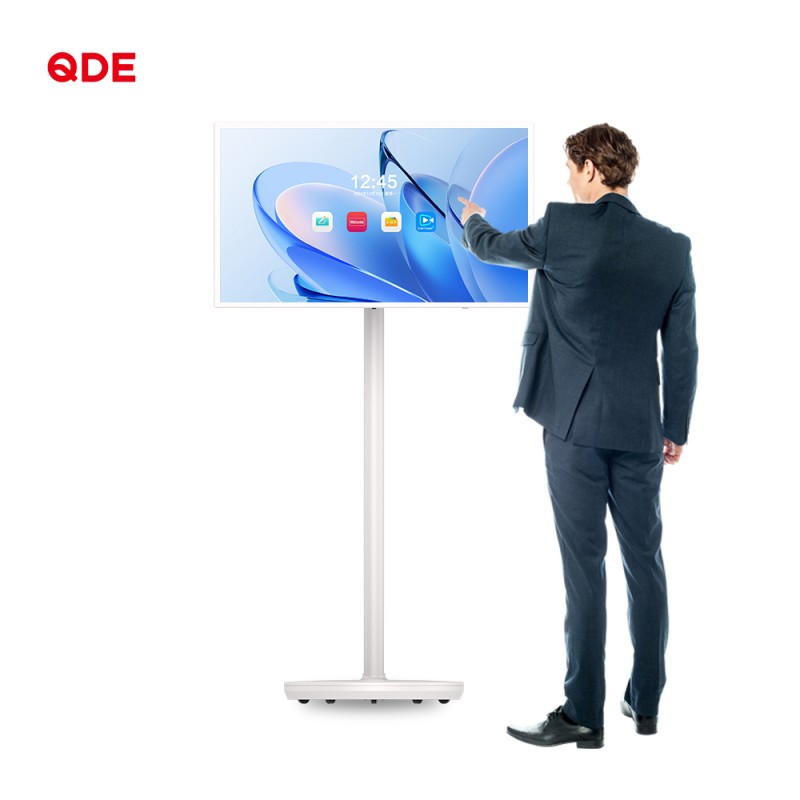
A flexible display should simplify routine tasks rather than introduce unnecessary complexity. For instance, users may switch between streaming, laptop presentations, and smartphone content throughout the day. Accordingly, intuitive controls and reliable connections influence the overall experience.
The product specifies simultaneous connections for up to three devices. HDMI 2.1 and Wi-Fi 6 provide supported connection options, while NFC enables the described file-sharing workflow. Voice-control compatibility with Google Assistant or Siri depends on the connected platform and configuration.
The stated IP54 rating indicates a defined level of protection against dust and water ingress. However, buyers should verify the manufacturer’s test documentation and operating guidance before planning outdoor use. This matters particularly for distributors serving hospitality, education, or mobile-lifestyle markets.
The following table summarizes the stated specifications and their purchasing relevance.
| Feature | Stated specification | Practical value for buyers |
|---|---|---|
| Display | 2.5K touchscreen | Supports detailed visual content |
| Peak brightness | 500 nits | Helps accommodate varied lighting |
| Battery | Up to 10 hours | Supports portable viewing |
| Wireless connectivity | Wi-Fi 6, Bluetooth 5.3 | Connects compatible devices and accessories |
| Wired connectivity | HDMI 2.1, USB-C | Supports flexible device integration |
| Camera | Front-facing 1080P | Supports video communication |
| Protection | IP54 | Provides specified dust and water protection |
These specifications describe the supplied product information. Buyers should confirm final configurations, testing records, and regional compliance documentation before ordering.
Different business channels require different product configurations. Retail brands may prioritize appearance and packaging, while corporate buyers may focus on connectivity and deployment requirements. Therefore, customizable mobile smart screen solutions should begin with a clear application brief.
Buyers can discuss branding, packaging, interface requirements, connectivity needs, and compatible software with the supplier. Screen configuration, stand design, and battery requirements also merit engineering review. However, each customization depends on component availability, development scope, and validation requirements.
For better quality consistency, B2B purchasers should define acceptance criteria before production. These may cover display uniformity, touchscreen response, battery performance, port functionality, and cosmetic inspection. In addition, sample approval and batch testing can help establish repeatable expectations.
Cost-effectiveness also depends on the complete procurement process. Standardized configurations, suitable packaging, and planned order volumes may help manage unit costs. Consequently, buyers should compare quotations alongside quality controls, customization support, warranty terms, and delivery requirements.
Review our when preparing product requirements. A detailed specification brief helps suppliers evaluate feasibility and recommend suitable options.
Q1: Can the product support different customer groups?
Yes. Its combination of mobility, entertainment, video calling, and device connectivity suits several usage scenarios. Businesses should select features according to their target customers and intended environments.
Q2: Can buyers request customized configurations?
Buyers can discuss branding, packaging, connectivity, and interface requirements with the supplier. The supplier should confirm technical feasibility, minimum order quantities, sampling arrangements, and production lead times before order confirmation.
Q3: How can businesses balance quality and cost?
Define essential specifications, test representative samples, and confirm quality-control procedures before bulk production. This approach helps buyers balance purchase cost with performance consistency, after-sales requirements, and long-term commercial value.

 Hot News