
Home > Blog >
Modern hospitals handle complex information flows daily. Effective communication directly impacts patient safety and staff productivity. Therefore, many healthcare institutions are now using healthcare digital signage displays to transform how hospitals share critical information and instructions.
However, choosing the right hardware is more than just picking a screen; durability, clarity, and ease of use must also be considered. This guide will explore key functionalities for the healthcare environment. We will help you select the best technology for your institution. Let’s work together to upgrade your hospital’s communication strategy.
Hospitals are high-stress environments where clear information saves lives. Traditional paper posters simply cannot keep up with rapid changes. Consequently, digital solutions offer a more dynamic and reliable alternative.
Wayfinding is a major challenge in large medical complexes. Clear healthcare digital signage displays help patients find their way easily. This reduces anxiety and ensures patients arrive at appointments on time. Furthermore, these screens can provide entertainment in waiting areas.
Staff members need instant access to emergency alerts and shift changes. Digital screens in breakrooms or hallways provide these updates instantly. This ensures everyone stays informed without constantly checking their phones.
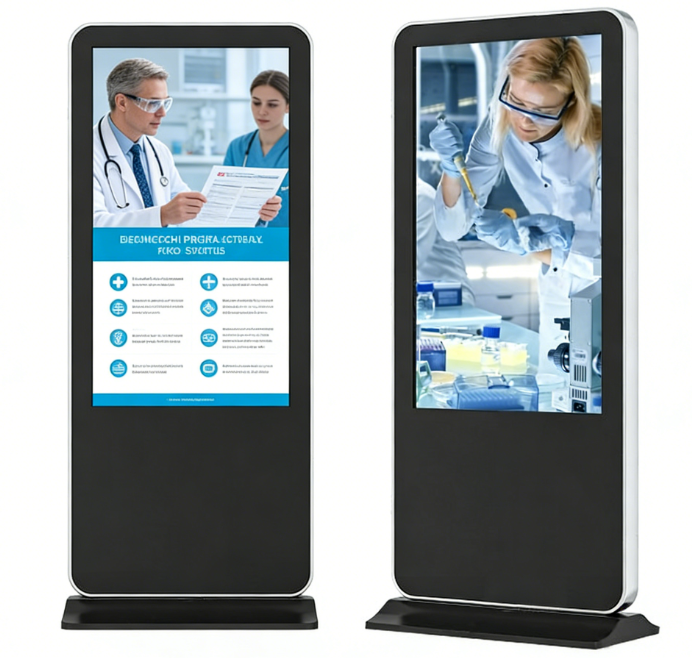
Medical settings demand specific hardware standards that consumer TVs cannot meet. You must prioritize these technical features when shopping for medical grade monitors.
Hospital corridors are typically brightly lit with fluorescent lights. Therefore, digital displays must be highly bright to ensure clear readability. Choosing a digital display with 4K resolution ensures sharp, clear text. This is crucial for displaying detailed medical schedules or complex maps.
Hospitals never close their doors. You need professional-grade displays designed for continuous 24/7 operation. Consumer screens will burn out quickly under these conditions. Professional healthcare digital signage displays feature superior cooling systems and durable components.
Infection control is of paramount importance in any medical setting. Therefore, it’s essential to choose monitors with an antibacterial glass coating whenever possible. Furthermore, ensure the bezel can withstand frequent cleaning with medical-grade disinfectants. This is crucial for maintaining a sterile and safe environment.
The hardware is only half of the solution. You also need powerful software to manage your patient engagement display systems.
Look for a system that allows remote updates. You should be able to change content across fifty screens from one computer. This saves time and ensures consistent messaging throughout the building.
The best systems connect directly to hospital databases. This allows the screens to show real-time wait times in the emergency room. It also enables instant emergency alerts during a “Code Blue” or fire drill.
Where you put your healthcare digital signage displays matters as much as the hardware. Think about the “patient journey” through your facility.
Main Entrances: Use large screens for primary wayfinding and general announcements.
Waiting Rooms: Display health tips, news, and estimated wait times.
Elevator Banks: Provide floor directories and department locations.
Staff Lounges: Share internal training videos and cafeteria menus.
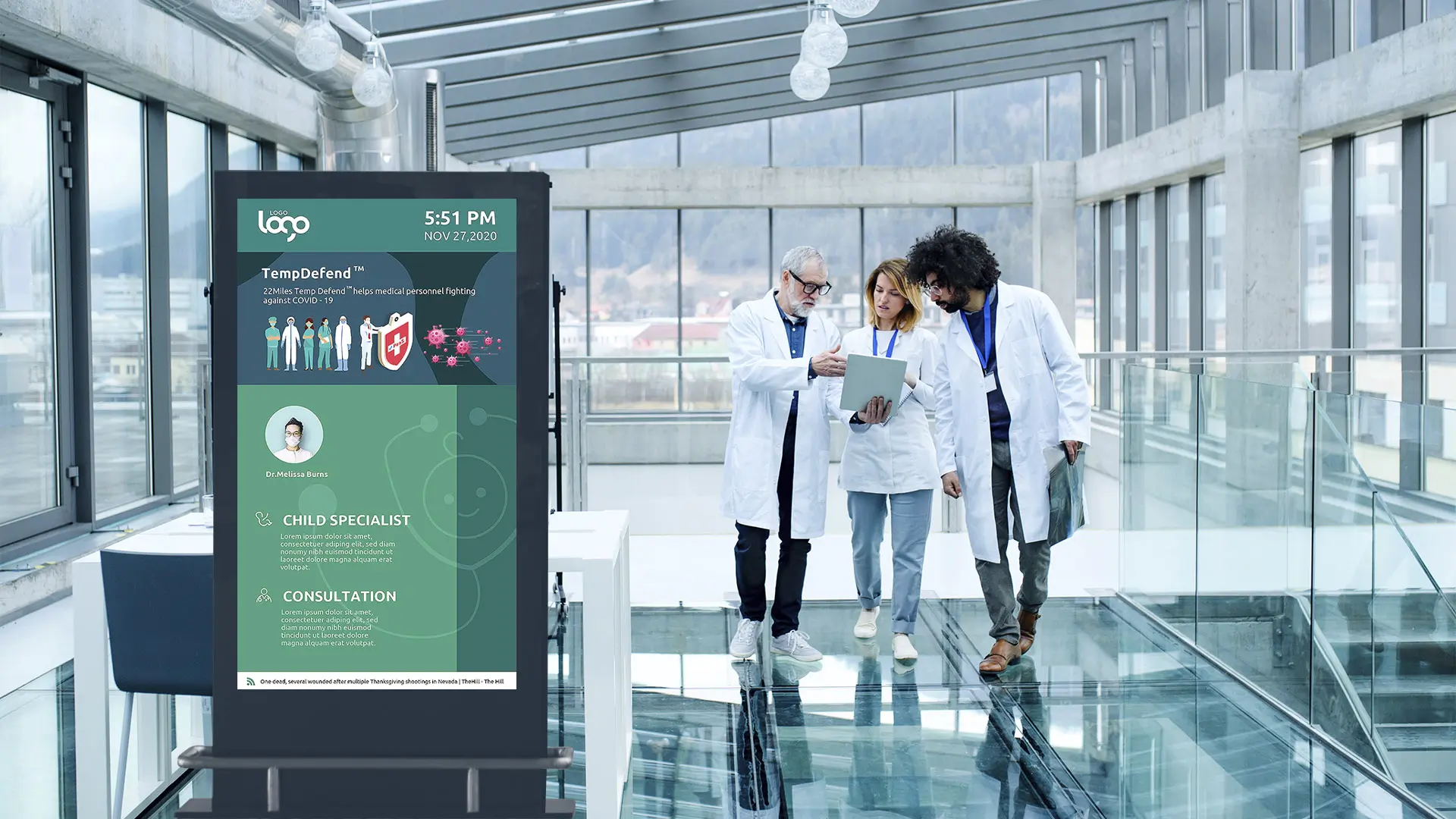
High-quality displays require a significant initial investment. However, you must look at the long-term benefits for your budget.
Hospitals spend thousands of dollars on paper signage every year. Digital screens eliminate this recurring expense almost entirely. You can update information for free with just a few clicks.
When patients can easily find their clinic, healthcare staff need to answer fewer direction-giving questions. This allows administrators to focus on more complex tasks. Increased efficiency leads to higher patient visits and higher revenue.
| Feature | Consumer TV | Healthcare Digital Signage Displays |
| Usage Rating | 6-8 hours/day | 24/7 Continuous |
| Brightness | 250-350 nits | 500-700+ nits |
| Warranty | 1 Year (Residential) | 3-5 Years (Commercial/Medical) |
| Control | Remote Control only | Centralized Network Control |
Hospitals handle sensitive data every single day. Therefore, your digital signage for clinics must meet strict security standards.
Ensure your CMS does not display any protected health information (PHI). The system should be a “one-way” broadcast to maintain HIPAA compliance. This protects your facility from legal risks and privacy breaches.
Choose displays that support secure Wi-Fi or LAN connections. Your IT department must be able to encrypt the data stream. This prevents hackers from taking control of your public screens.
The medical field is undergoing rapid technological advancements. Choosing a system that can grow alongside the hospital is of paramount importance.
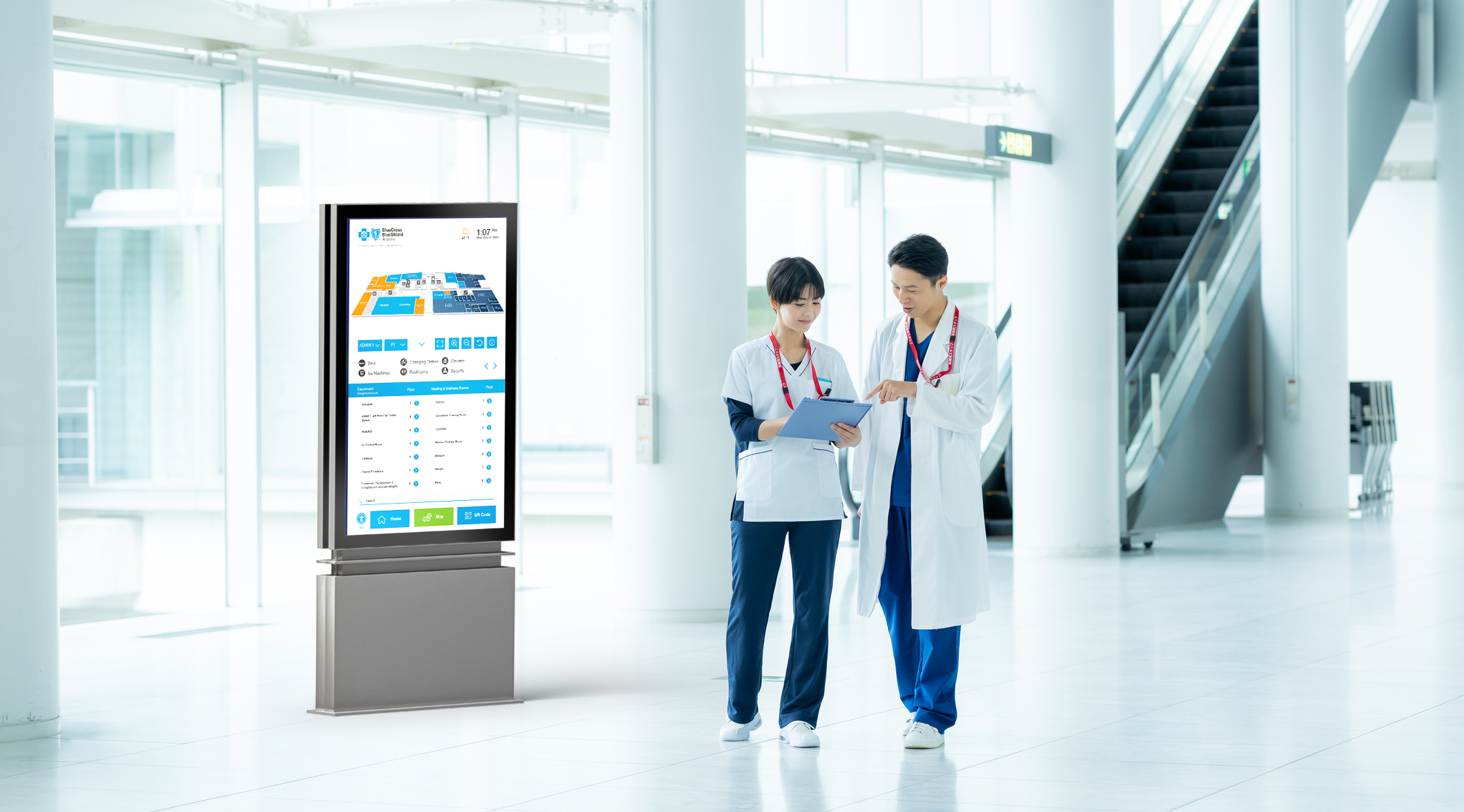
Consider adding touchscreens in the main lobby. Interactive hospital wayfinding screens allow visitors to search for specific doctors. This provides a modern, high-tech feel to your facility.
Modern technological advancements allow patients to use “portable maps.” Users can scan QR codes on the screen to obtain route guidance on their smartphones. This bridge between physical screens and mobile technology represents the future of healthcare.
Choosing the right healthcare digital signage displays is a strategic move for any modern hospital. Focus on high brightness, medical-grade durability, and centralized software. By doing so, you improve patient satisfaction and streamline your daily operations.
Modern technology makes the complex hospital environment much easier to navigate. Do not settle for basic screens when your patients deserve the best. Invest in a professional display system today and watch your facility thrive!
If you’re looking to elevate your facility, contact us, and a member of our team will demonstrate how digital signage can enhance patient convenience.




 Hot News