
Home > Blog >
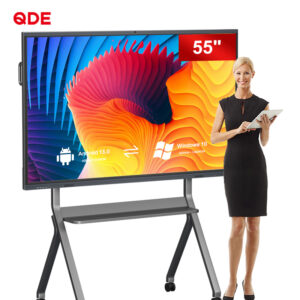
Modern classrooms are no longer static environments. Educational philosophy now emphasizes flexibility and active movement. Consequently, the tools we use must adapt to this change. Many schools today face a significant hardware choice. Should they install a fixed wall-mounted system? Or should they invest in a China smart nano blackboard on wheels?
For resource-sharing schools, the answer is increasingly clear. Mobility offers a massive advantage over fixed installations. This article explores the physics and educational logic of mobile displays. We will examine why wheels are transforming the modern learning experience.
To understand the preference for wheels, we must look at basic physics. Moving a heavy object requires overcoming static friction. A fixed wall mount represents a “static” investment. It remains locked in one single location forever.
A China smart nano blackboard on wheels utilizes rolling friction. In physics, rolling friction is significantly lower than sliding friction. This mechanical advantage allows a single teacher to move the device. You can transport the display across a hallway with minimal force (F=ma). This efficiency allows schools to share one high-end device between multiple rooms.
Light travels in straight lines. In a fixed setup, students at the sides often see glare. By using a mobile stand, teachers can adjust the screen angle. This simple rotation follows the laws of reflection to eliminate glare. It ensures that every student has a “front-row” visual experience.

Think about how we travel in modern airports. We do not carry heavy trunks without wheels anymore. We use rolling suitcases because they provide effortless transit. Classrooms benefit from this same common-sense logic.
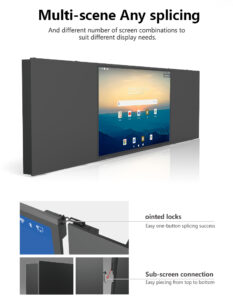
Many schools use “open-plan” or multi-purpose halls. A fixed blackboard limits the use of these spaces. However, a mobile China smart nano blackboard creates an instant digital lab. When the lesson ends, you simply roll the board away. This allows the room to transform for gym class or lunch.
Wall mounting requires heavy drilling and structural reinforcement. It often involves expensive electrical work behind the drywall. In contrast, a mobile unit is “plug-and-play.” You avoid permanent damage to the building’s infrastructure. This saves the school significant money on facility maintenance.
Beyond physics, mobility changes how teachers interact with students. It breaks the traditional “sage on the stage” model.
Group Collaboration: Roll the board to a specific student group for focused coaching.
Station-Based Learning: Use the board as one of several interactive learning stations.
Physical Safety: Adjust the height and position to prevent neck strain for younger children.
Easy Maintenance: Roll the unit to the IT department for quick software updates.
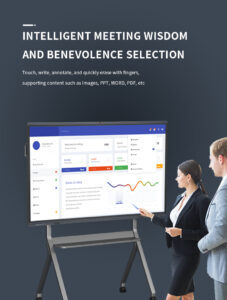
Teachers can move the board to the center of a circle. This creates an intimate “huddle” for storytelling or complex demonstrations. This proximity improves student engagement levels significantly. It turns a distant screen into a personal, interactive canvas.
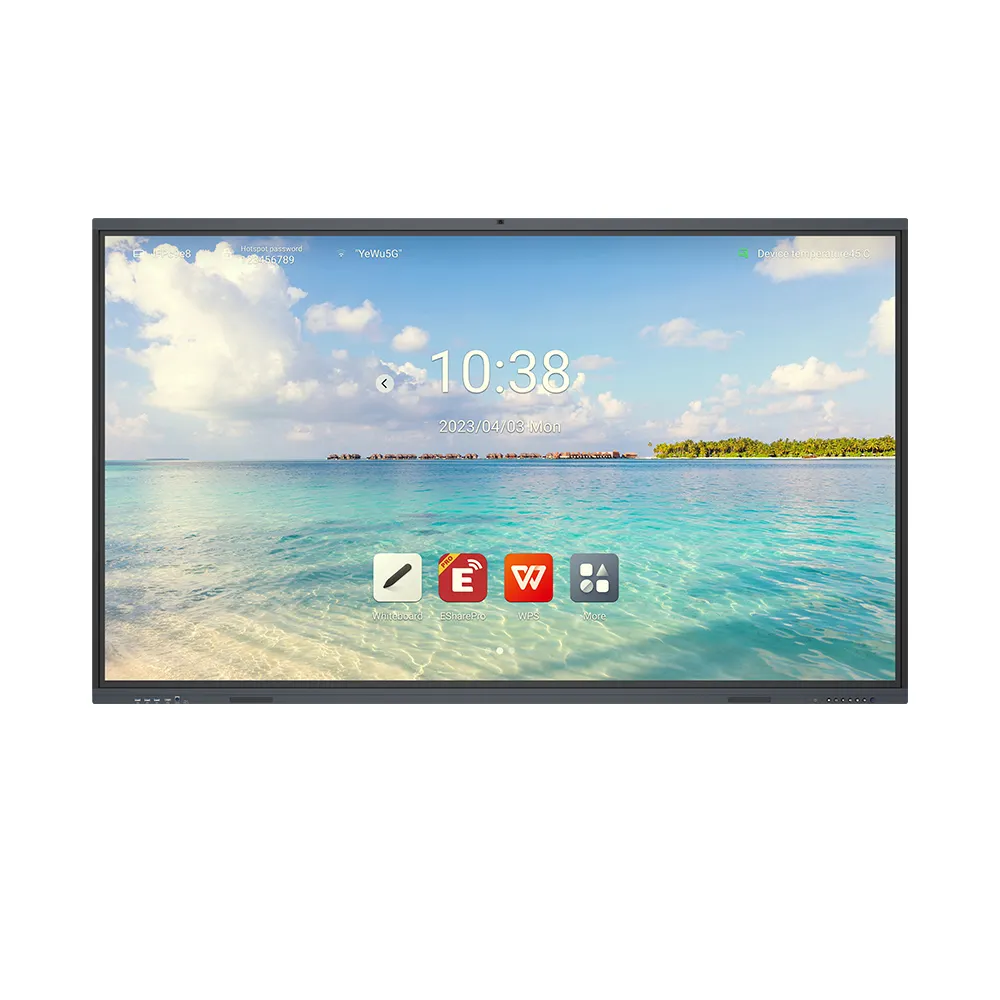
The “nano” in China smart nano blackboard refers to the specialized glass coating. This technology is vital for high-traffic, shared environments.
The nano-surface resists scratches from constant movement and use. It allows for traditional chalk writing alongside digital touch inputs. For shared schools, this versatility is essential. Some teachers prefer the “old school” feel of chalk. Others want to use 4K video and interactive apps.
Modern nano-coatings often include anti-glare and blue-light filtering. This protects the eyesight of students who sit near the screen. Furthermore, the surface is easy to clean with a simple cloth. In a shared resource environment, hygiene is a top priority for administrators.
[Explore the technical specs of the latest portable classroom technology solutions.]
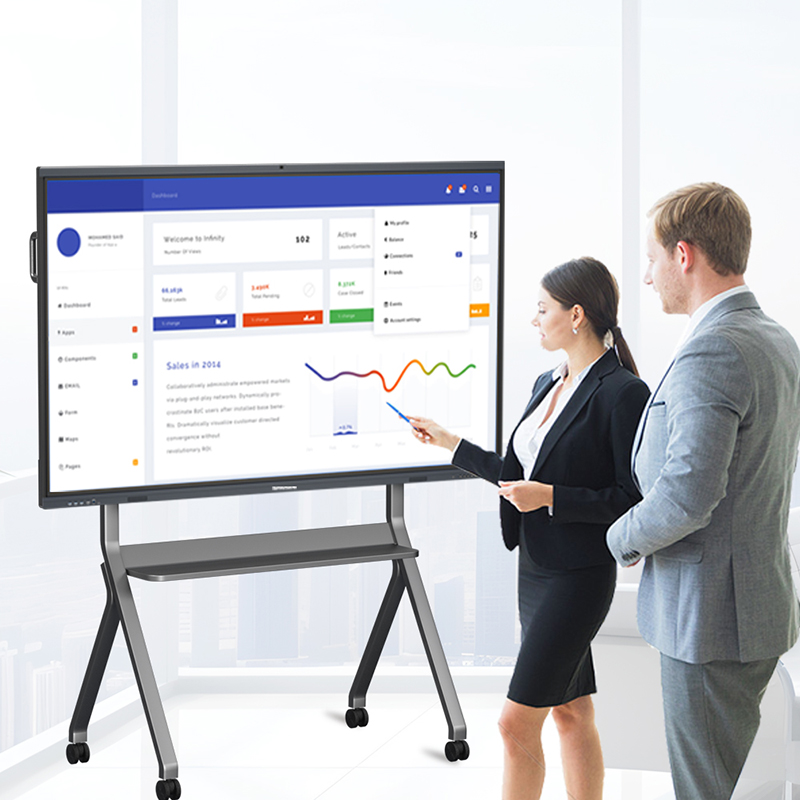
Some critics argue that mobile units are less stable. However, modern industrial design solves this problem. High-quality stands feature locking casters and a low center of gravity.
Manufacturers perform “tip-tests” to ensure these boards are safe. Even if a student bumps into the unit, it remains upright. The heavy base acts as a stabilizer against accidental tipping. This makes the China smart nano blackboard safe for even the most active classrooms.
Mobile boards often include high-definition cameras and microphones. Teachers can position the board to capture the whole class for a Zoom session. This is much harder to do with a fixed wall mount. Mobility ensures the camera always has the best angle for remote students.
[Read our guide on building flexible learning environments with smart hardware.]
Most schools operate on a strict, limited budget. Buying a smart board for every single room is often impossible.
One mobile board can serve three or four different classrooms. This triples the Return on Investment (ROI) for the school district. It allows smaller schools to access high-end technology. They get the benefits of a China smart nano blackboard without the massive price tag.
| Feature | Fixed Wall Mount | Mobile Nano Blackboard |
| Space Usage | Permanent / Restrictive | Flexible / Multi-use |
| Physics | Static / Fixed Angle | Dynamic / Adjustable |
| Installation | Expensive / Structural | Low-cost / Plug-and-Play |
| Sharing | Impossible | High (Shared across rooms) |
| Student Access | Distant | Immersive / Close-up |

The era of the “fixed” classroom is ending. Schools now demand tools that move at the speed of thought. The China smart nano blackboard on wheels provides exactly that. It combines the power of digital tech with the physics of mobility.
By choosing wheels, schools protect their budget and their students. They create a dynamic environment where learning has no boundaries. Do not lock your technology to a wall. Set it free on wheels and watch your students thrive. The future of education is mobile, interactive, and smart.
 Hot News