
Home > Blog >
Upgrading K-12 learning spaces with a Nano Smart Blackboard solves chronic classroom air quality issues instantly. This modern hardware choice eliminates toxic airborne chalk dust completely. Simultaneously, it delivers crisp 4K digital interactivity across a continuous, full-surface writing canvas. Educational researchers observe that dust-free classrooms significantly reduce adolescent respiratory absences.
Furthermore, combining tactile chalk writing with responsive multi-touch software boosts daily student engagement. Modern educators no longer need to choose between traditional teaching habits and digital convenience.
Ultimately, adopting a dustless smart blackboard protects adolescent health while modernizing instructional delivery. Now, let us examine the severe health risks that traditional chalkboards impose on growing students.
Every experienced school principal knows the messy reality of traditional chalkboards. Wiping down green boards creates dense clouds of microscopic particulate matter throughout the room.
Adolescents spend roughly six hours inside classrooms every single school day. Breathing fine calcium sulfate chalk particles daily irritates delicate upper respiratory tracts. For teenagers suffering from asthma or seasonal allergies, chalk dust triggers frequent coughing fits. Over time, poor indoor air quality weakens student concentration and disrupts learning routines.
Therefore, school boards must deploy healthier classroom technology for students to guarantee clean breathing environments.
Older digital displays often suffer from harsh screen glare and flickering backlights. When students squint at reflective glass for hours, they develop severe digital eye strain. In contrast, an interactive nano blackboard for K-12 schools uses anti-glare tempered safety glass. This specialized coating filters harmful blue light emissions while maintaining wide viewing angles.
Consequently, students sitting in side rows enjoy clear lesson visibility without suffering from eye fatigue.
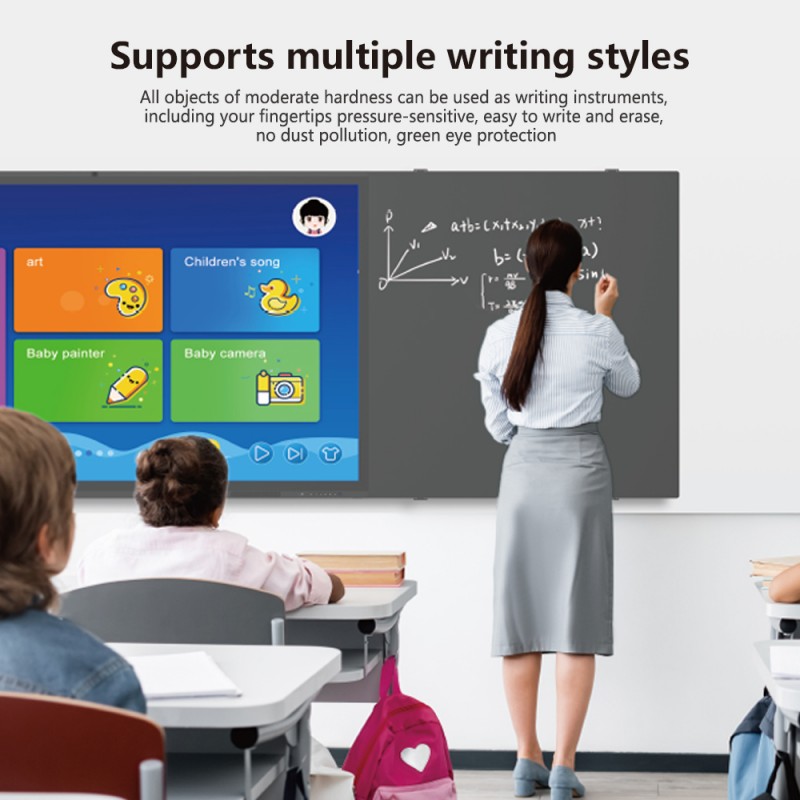
Pedagogical experts emphasize that physical writing plays a vital role in memory retention. Writing out equations by hand helps adolescents process complex mathematical concepts more effectively.
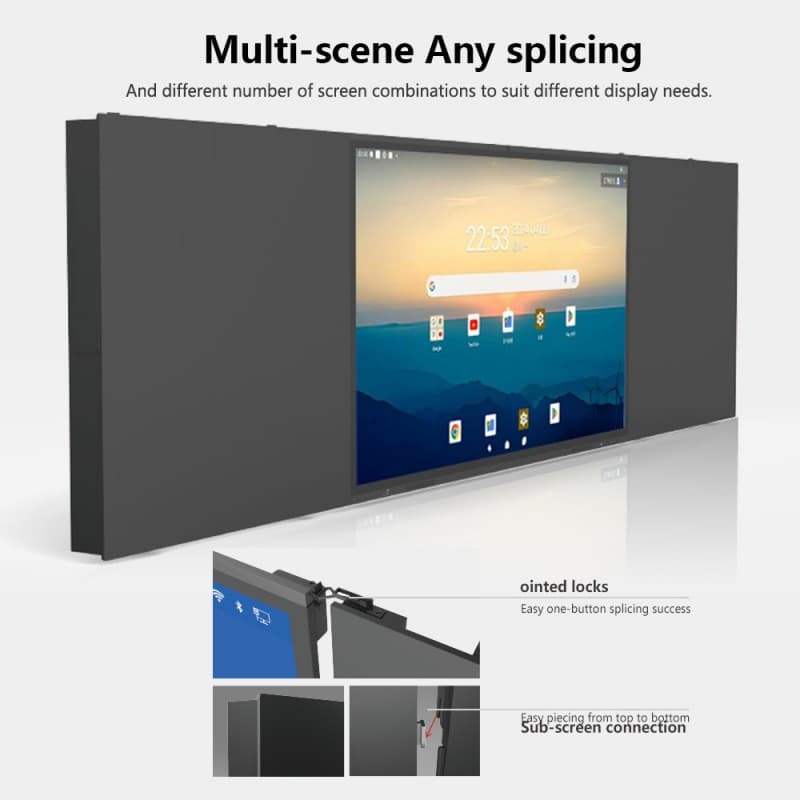
A Nano Smart Blackboard features a seamless three-panel glass architecture. Teachers can write with dustless chalk or liquid pens on the outer wings. Meanwhile, the central panel houses an integrated 4K interactive touch display. With a single swipe, the entire surface transforms into a massive digital canvas.
This hybrid design lets teachers sketch diagrams naturally while displaying dynamic 3D science simulations.
Modern classrooms thrive when students solve complex problems together at the board. High-density touch sensors support up to twenty simultaneous touch points.
Multi-Student Annotation: Allows several adolescents to solve equations side-by-side smoothly.
One-Touch Screen Capture: Saves full whiteboard annotations directly to cloud storage folders.
Wireless Screen Casting: Enables students to project tablet assignments onto the main board instantly.
Instant QR Code Sharing: Lets absent students scan board notes directly to their smartphones.
This seamless digital connectivity ensures no student falls behind during fast-paced academic lectures.
To help school committees evaluate classroom upgrades, educational specialists created this comparative standard framework.
| Evaluation Criterion | Traditional Chalkboards | Standard Interactive Flat Panels | Nano Smart Blackboards |
| Air Quality Impact | Poor (Generates heavy airborne dust) | Excellent (Zero airborne particulates) | Excellent (Zero dust, clean surface) |
| Tactile Writing Area | Full board surface (Analog chalk only) | Limited to central glass screen | Continuous full-surface writing wall |
| Eye Safety Standard | Non-reflective surface (Requires lighting) | Variable glare (Prone to reflections) | Anti-glare, low blue light glass |
| Physical Surface Strength | Scratches easily over time | Fragile screen borders | 7H tempered unbreakable glass |
| Lesson Saving Capability | Zero (Must erase physically) | Cloud saving supported | Instant cloud sync and QR code export |
Investing in a dust free smart writing surface for education provides substantial long-term benefits for school districts. It eliminates recurring maintenance costs while modernizing teaching workflows.
Chalk dust does not just harm adolescent lungs; it also destroys delicate electronic components. Fine dust settles inside computer fans, AV projectors, and HVAC filters. Consequently, school IT departments spend thousands of dollars replacing clogged equipment annually. Transitioning to dust-free nano surfaces protects school infrastructure and extends hardware lifespans.
Teachers often resist complicated technology upgrades that require steep learning curves. Fortunately, nano smart surfaces maintain familiar physical writing habits. Instructors can write notes using standard liquid chalk markers effortlessly. When needed, they can activate rich multimedia content with a simple hand gesture.
This intuitive operation reduces teacher burnout and keeps classroom instruction moving smoothly.
Installing interactive smart blackboards requires following structured site preparation guidelines. School technology teams should execute this simple deployment sequence.
Verify Wall Load Capacity: Ensure classroom walls can support heavy three-panel steel chassis frames.
Optimize Electrical Outlets: Install grounded power connections directly behind the central display panel.
Configure Campus Wi-Fi VLANs: Connect boards to secure local networks for automatic firmware updates.
Calibrate Touch Sensitivity: Run coordinate alignment software to ensure precise pen tracking across panels.
Following this structured installation process guarantees reliable daily operations across all campus facilities.
A Nano Smart Blackboard uses smooth, non-porous nano-coated glass surfaces. Teachers write using dustless liquid chalk or specialized water-soluble markers. These markers leave zero dry particulate residue during erasing, keeping classroom air completely clean.
Yes, absolutely. The entire outer surface functions as a continuous physical writing board. When the central digital screen is powered off, it blends seamlessly into a standard black writing surface.
Yes, commercial nano blackboards utilize 7H hardness rated tempered safety glass. This heavy-duty glass resists scratches, hard knocks, and daily student impacts effortlessly.

Relying on dusty, outdated chalkboards exposes growing adolescents to preventable respiratory hazards. School leaders cannot build modern educational environments using dusty twentieth-century equipment. Upgrading campus facilities to leverage a Nano Smart Blackboard network transforms learning spaces completely. This investment unites clean air protections with cutting-edge 4K multi-touch learning tools.
Stop letting chalk dust and eye strain compromise student wellness and academic achievement. Invest in durable, dust-free interactive blackboards that safeguard student health and empower educators. Your teaching staff will enjoy cleaner working conditions, and parents will appreciate healthier classrooms. Modernize your school technology strategy today to lead the digital education revolution
 Hot News